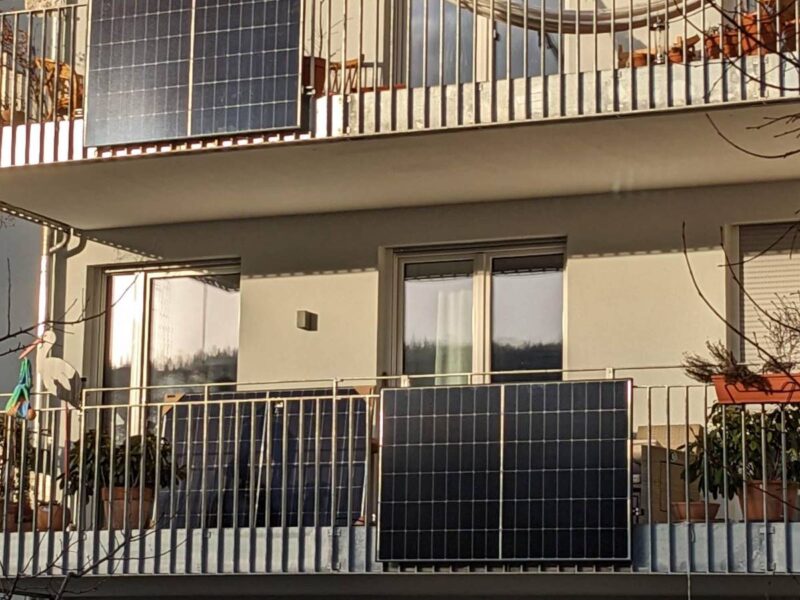
Quick answer: Yes, in England, Scotland and Wales. Since 27 August 2026 you can legally plug a compliant solar kit into an ordinary 13A socket, as long as it outputs no more than 800W, meets the government’s product specification and is registered with your network operator. Northern Ireland is not covered yet.
For years, plug-in solar panels (often called balcony solar) were common in Germany but not allowed here. That changed when a new set of regulations came into force on 27 August 2026. This guide explains what changed, what the rules say and what you should check before you buy.
What changed and when
The change was made by The Plugs and Sockets etc. (Safety) Regulations 1994 and Electricity Safety, Quality and Continuity Regulations 2002 (Amendment) Regulations 2026, known as SI 2026/848. It was made on 16 July 2026 and came into force on 27 August 2026.
Before this, two sets of rules stood in the way. British Standard BS 1363 does not allow normal plugs to be used to connect a generator to a socket, and the wiring rules expected generation to be hard wired by an installer. The explanatory memorandum says that, in practice, plug-in solar could not legally be sold or used.
The new regulations create a route for plugs on approved plug-in solar devices, and allow those devices to be connected to a home’s wiring, as long as they meet the government’s Plug-in Solar Device Interim Product Specification (version 2.0, July 2026).
The government announced the change in a press release on 26 August 2026, saying plug-in solar was now legal “across Great Britain”.
What the rules allow
The explanatory memorandum and the product specification set out the main limits:
- 800W AC output. The microinverter can feed no more than 800W into your home. The regulations define a plug-in microgenerator as a solar device with “a maximum rated alternating current output not exceeding 800 watts”.
- Up to 2,000W of panels. The panels themselves can be rated at up to 2,000W DC. The inverter limits what reaches the socket.
- A standard UK plug into a fixed socket. The plug must conform to BS 1363 (apart from the generation rule) and go straight into a fixed BS 1363 socket.
- Solar only, no batteries. The specification does not cover plug-in batteries or solar kits with built-in batteries.
- Installed to the maker’s instructions. This includes the maker’s electrical, building and fire safety requirements.
The specification also says only one plug-in solar device should be used per household circuit, and the device must only go on a socket circuit, not a circuit that also supplies lighting or fixed equipment.
What you cannot do
The product specification is clear about several things that are not allowed:
- No extension leads or adaptors. Devices must not be connected through extension cables, multi-way adaptors, RCD adaptors or travel adaptors.
- No mounting on certain surfaces. Installation is not permitted on aluminium composite (ACM) or metal composite (MCM) cladding, high pressure laminate (HPL) cladding, timber cladding, timber balconies, or buildings going through external wall or building safety remediation.
- No DIY changes to your wiring. Any changes to your home’s electrical installation must be done by a qualified electrician.
- No damaged or unsuitable sockets. The device should not be plugged into a damaged or degraded socket. If you are not sure about your wiring, the specification says to get it checked by a qualified electrician.
The Energy Saving Trust’s plug-in solar checklist, written with the Department for Energy Security and Net Zero, adds that you should not install a kit if your fuse box still uses old rewireable fuses.
Do you need permission?
Possibly. The government’s press release says that before buying or installing a kit, people should check whether permission is needed. That might mean permission from a landlord, building owner or freeholder, planning permission, or listed building consent.
In England, a separate planning change also came into force on 27 August 2026. The Town and Country Planning (General Permitted Development) (England) (Amendment) Order 2026 brings plug-in solar within the existing permitted development rights for solar, subject to limits. For example, plug-in solar on a block of flats is not permitted development where any part would be installed on a wooden wall, balcony or enclosure, or on timber-clad parts of the building.
For Scotland and Wales, the Energy Saving Trust advises checking the rules in your area before installing. If you rent or live in a flat, read our guide to plug-in solar in a flat or rented home.
How many can you have?
One per household, for now. The product specification itself allows one device per final circuit, but it notes that the current network connection rules, Engineering Recommendation G98 Issue 2 Amendment 1 2026, “restrict this to one device per household, which applies unless and until that is amended.”
The Energy Saving Trust gives the same advice: only connect one plug-in solar device per property.
Do you need to register it?
Yes. The product specification requires kits to carry a statement that notifying your distribution network operator (DNO) about connection and disconnection is mandatory. The Energy Saving Trust says registering is a legal requirement, and that you do it through the UK Plug-in Solar Registration website.
The Energy Networks Association, which represents the network operators, says plug-in solar devices are registered by householders at myplugin.solar. According to the Energy Saving Trust, you need your name, your postcode and the make and model of your device, and you get an on-screen confirmation rather than an email.
How much could you save?
The government says a plug-in solar kit could save “up to £110 a year” and provide “up to 20%” of an average home’s electricity use. These are the government’s own figures, and “up to” matters. Your savings depend on:
- which way the panels face and how much shade they get (the Energy Saving Trust says south facing and unshaded is best, and does not recommend north facing or shaded spots)
- how much electricity you use during the day, when the panels are generating
- what you pay for electricity
We are not putting our own savings figure on this yet. A plug-in solar savings estimator is on its way to our tools section, and it will always show a range rather than a single number.
What about Northern Ireland?
Not yet. The regulations that let plug-in solar be connected to a home’s wiring amend rules that apply in England, Wales and Scotland only. The explanatory memorandum notes that Northern Ireland has its own electricity safety regulations, and the product specification says its application to Northern Ireland “is subject to further consideration”. The Energy Saving Trust says plug-in solar panels are not currently permitted for use in Northern Ireland and that Northern Ireland may follow once regulations are updated.
What to check before you buy
- Check the model is compliant. The Energy Saving Trust says to check the exact model is on the ENA Connect Direct device register. Manufacturers must register devices on the ENA Type Test Register before selling them.
- Get any permissions first. Landlord, freeholder, managing agent, planning or listed building consent, as relevant.
- Check your fuse box. Look for circuit breakers marked RCD, RCBO or MCB. If you have old rewireable fuses, speak to an electrician first.
- Find a suitable socket. It must be on a socket circuit without lighting or fixed appliances, close enough for the supplied cable to reach without an extension lead. An outdoor socket must be weatherproof and fitted by a qualified electrician.
- Check your insurance. The product specification says users are responsible for checking whether the product affects their insurance, including any building insurance.
- Plan to register it. Have the make and model ready for the registration website.
Frequently asked questions
Is balcony solar the same as plug-in solar?
Usually, yes. “Balcony solar” is a common name for the same kind of kit. In the UK rules it is a “plug-in microgenerator”. Remember that timber balconies are on the list of surfaces where installation is not permitted.
Can I use a kit with more than 800W of panels?
The panels can add up to more than 800W, up to a 2,000W DC limit, but the inverter must limit the output into your home to 800W. The Energy Saving Trust suggests speaking to a qualified electrician if the total power of the panels is more than 960W.
Can I add a battery?
Not under these rules. The product specification does not apply to plug-in battery systems or solar kits with integrated batteries.
Can I get paid for electricity I export?
We have not yet found official confirmation of how export payments work for plug-in solar. We will update this guide when Ofgem, a supplier or the government confirms the position.
Sources
- SI 2026/848: The Plugs and Sockets etc. (Safety) Regulations 1994 and Electricity Safety, Quality and Continuity Regulations 2002 (Amendment) Regulations 2026, legislation.gov.uk
- Explanatory memorandum to SI 2026/848, Department for Energy Security and Net Zero
- Plug-in Solar Device Interim Product Specification, version 2.0, Department for Energy Security and Net Zero
- Plug-in solar: regulatory amendment and interim product specification, GOV.UK
- Households can save as plug-in solar panels come to market, GOV.UK, 26 August 2026
- SI 2026/896: The Town and Country Planning (General Permitted Development) (England) (Amendment) Order 2026, legislation.gov.uk
- Plug-in solar panels: checks to make before you buy, Energy Saving Trust
- ENA Connect Direct news release, 14 September 2026, Energy Networks Association
Last checked: 19 October 2026
Image credit: RobbieIanMorrison via Wikimedia Commons, CC BY 4.0, cropped.