Quick answer: About £70 to £110 a year for a typical 800W kit, according to the government and the Energy Saving Trust, at current price cap rates. With kits advertised at about £450 to £750, that means a payback of roughly 4 years in the best case and up to about 11 years if your kit faces east or west or you are out all day.
The official figures
- The government says plug-in solar could save households “up to £110 a year” and cover up to 20% of average electricity use, in its August 2026 announcement.
- The Energy Saving Trust estimates around £100 a year if you are home all day and £70 if you are out during the day. That is for a south-facing panel at 30° in Manchester, a home using 2,500kWh a year and electricity at 24.7p/kWh.
The method
The government’s impact assessment works out savings in three steps:
- How much the kit generates in a year, in kWh.
- How much of that you use at home as it is generated. This is the self-consumption rate. Anything you do not use flows out to the grid and, for most people, earns nothing.
- The value of what you use, at the price you would otherwise pay per kWh.
Savings = generation × share used at home × unit rate.
The standing charge does not change, so plug-in solar only cuts the unit part of your bill.
Worked example 1: south-facing at 30°
The impact assessment models a home of average Great Britain electricity use, someone home all day, with an 800W kit facing south at 30°. It assumes the kit generates 690kWh a year and 62% is used at home.
- 690kWh × 62% = 428kWh used at home.
- At the July to September 2026 cap of 26.11p/kWh: 428 × £0.2611 = £111.75. This is the government’s “around £110”.
- At the October to December 2026 cap of 26.32p/kWh, from Ofgem: 428 × £0.2632 = £112.65 a year.
Worked example 2: vertical, facing east or west
The same household with a vertical panel facing east or west generates 378kWh, and uses 72% of it.
- 378kWh × 72% = 272kWh used at home.
- 272 × £0.2632 = £71.59 a year.
Vertical panels generate less, but a higher share is used, because the output is spread across the day.
What changes the answer
How much you use in the daytime matters as much as the panel. This table uses the government’s 690kWh generation figure and the October to December cap rate, with different shares used at home. The shares are our illustrations, not official figures.
| Share used at home | kWh used | Saving a year |
|---|---|---|
| 40% | 276kWh | £72.64 |
| 62% (government example) | 428kWh | £112.65 |
| 80% | 552kWh | £145.29 |
Where you live and which way it faces change the generation. We ran the EU’s PVGIS tool for an 800W kit facing south at 30°. It estimated 808kWh a year in London, 704kWh in Manchester and 676kWh in Glasgow.
Your tariff sets the unit rate. On a time-of-use tariff, solar is worth whatever you would pay at the time it is generated, usually the daytime rate.
Payback
Payback in years = cost of the kit ÷ saving a year.
These use kit prices advertised on 19 October 2026 and the two worked examples above.
| Kit cost | Saving £112.65 a year | Saving £71.59 a year |
|---|---|---|
| £450 | 4.0 years | 6.3 years |
| £650 | 5.8 years | 9.1 years |
| £750 | 6.7 years | 10.5 years |
Two cautions:
- A two-panel kit generates more than the 690kWh used here, so its saving should be higher, but you may use a smaller share of it.
- Extra costs push payback out. If you pay £200 for an outdoor socket, the figure used as an assumption in the impact assessment, a £450 kit costs £650 in total. The impact assessment also assumes the inverter may need replacing after about 10 years, at around £100.
See how much plug-in solar costs for prices.
Can export add to the savings?
For most people, not yet. Export payments usually need a certified installation, which plug-in kits do not have. Octopus Energy says customers who buy its kit and take its supply can join its Outgoing export tariff, and estimates the most a plug-in kit could earn from export is about £50 a year.
How to get the most from your kit
- Run washing machines, dishwashers and other big appliances in the middle of the day, ideally one at a time.
- Put the panel where it gets the most sun. South, unshaded, is best.
- Check the app. Most kits show what they are generating, which helps you time your use.
Frequently asked questions
Will plug-in solar cut my standing charge?
No. It only reduces the units you buy. The standing charge stays the same.
Does the VAT cut on electricity affect savings?
Yes, slightly. Ofgem says there is no VAT on electricity from 1 October 2026 to 31 March 2027, and that is reflected in the 26.32p/kWh cap rate we used.
Do I save more if electricity prices rise?
Yes. Every kWh you use from the panel is one you do not buy, so higher prices mean higher savings.
Is £110 a year realistic?
Yes, for a well-placed panel in a home where someone is in during the day. If you are out all day, the Energy Saving Trust’s £70 is a safer guide.
Work out your own figures with our plug-in solar savings calculator, read is plug-in solar worth it, or see Plug-in solar: the complete UK guide. Check the rules in is plug-in solar legal and plug-in solar in flats and rented homes. More in solar and batteries.
Sources
- Plug-in solar final stage impact assessment, DESNZ, Table 7
- Energy price cap unit rates and standing charges, Ofgem
- Households can save as plug-in solar panels come to market, GOV.UK, 26 August 2026
- Plug-in solar panels, Energy Saving Trust
- PVGIS 5.3, European Commission Joint Research Centre, SARAH3 data, 14% system losses, run 19 October 2026
- Plug-in Solar, Octopus Energy
Last checked: 19 October 2026
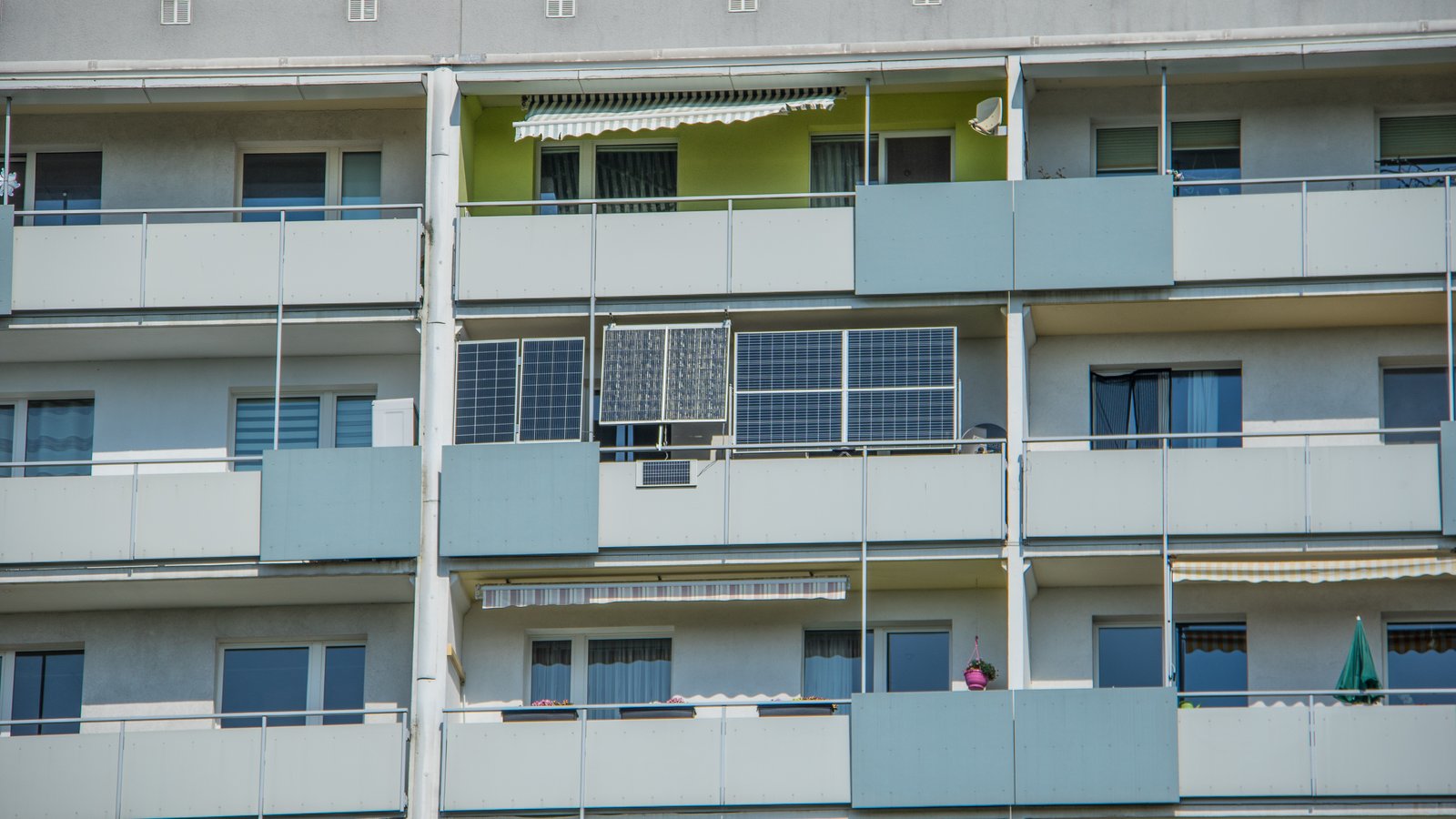
Image credit: Frank Eritt via Wikimedia Commons, CC BY-SA 4.0, cropped.