
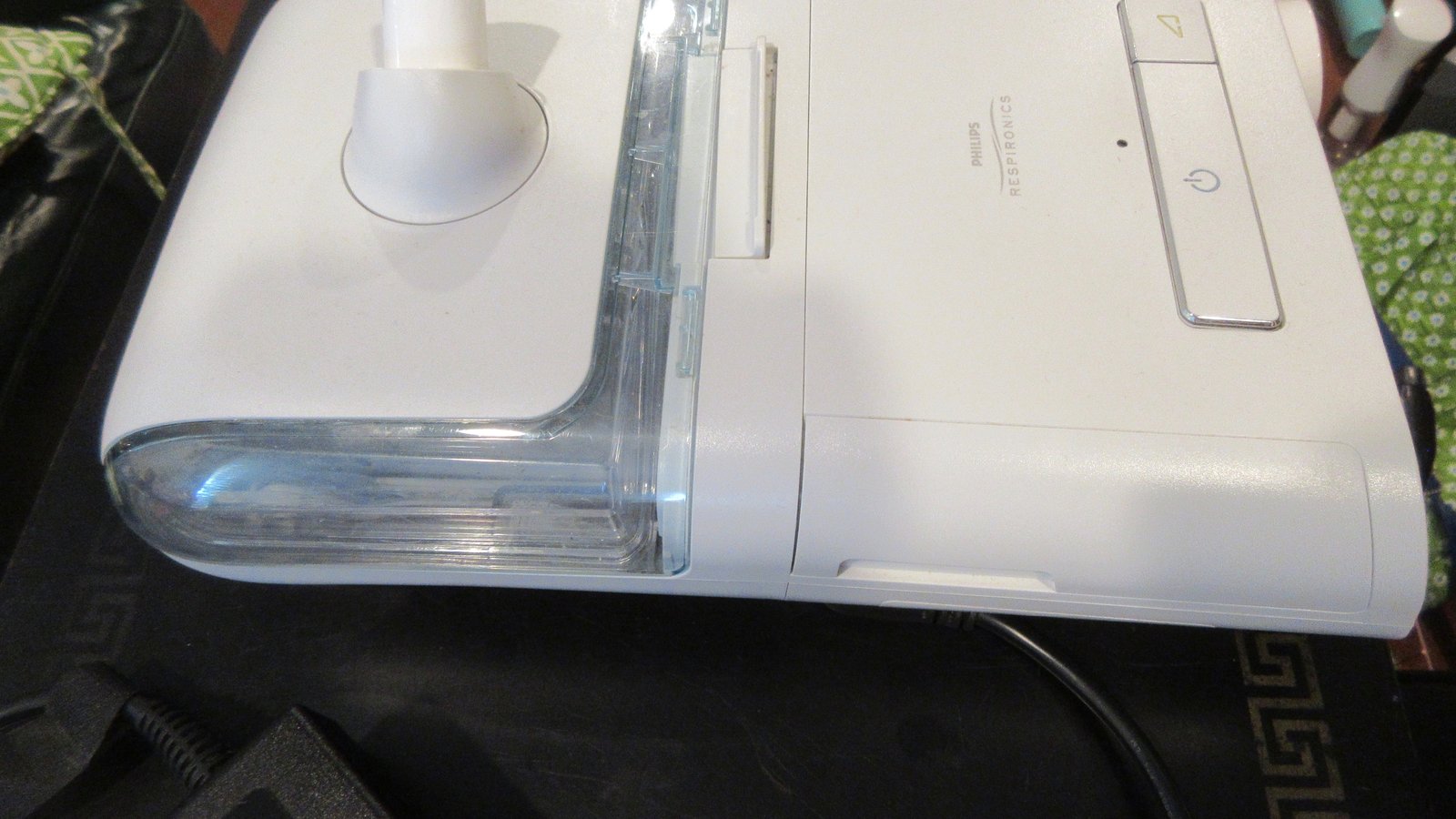
Quick answer: Often yes, but check the numbers for your own device. Find the appliance’s energy use, work out the watt-hours (Wh) for the hours you need, and add a margin for losses. For example, ResMed’s user guide for its AirSense 11 CPAP lists typical power consumption of 56.1W, which works out at about 450Wh over eight hours, within the capacity of a 1kWh power station. If you rely on a CPAP or any medical device, check with your clinician and the device maker before using a power station. This is not medical advice.
The method
- Find the energy use. Use the appliance’s energy label, user guide or rating plate.
- Turn it into watt-hours for your time. Multiply watts by hours, or convert yearly kWh into a daily figure.
- Check the rated output and surge. The station must supply the running power and any start-up surge. See what a portable power station can run.
- Add a margin. Converting battery power to mains-style AC loses some energy. Jackery’s own runtime examples, for instance, are about 84% of the simple sum for a 60W fridge.
Fridges and freezers
Use the label, not the watts
A fridge’s compressor cycles on and off, so it does not draw its rated wattage all the time. The best guide is the energy label. The Energy Saving Trust explains that you can compare appliances by their yearly energy consumption in kWh per annum, shown under the rating scale on the label.
To turn that into an overnight figure:
- divide the kWh per annum by 365 to get kWh per day
- multiply by 1,000 to get Wh per day
- halve it for roughly 12 hours
Example only: a fridge with a label figure of 150kWh per annum uses about 0.41kWh, or 411Wh, a day, so roughly 205Wh over 12 hours. Real use varies with how often you open the door, the room temperature and how full it is. Check your own label.
Start-up surge
When the compressor starts, it can briefly draw more power. Check that the station’s surge or peak rating covers it. If the label or manual gives a start-up figure, use it. If not, ask the maker.
Practical tips in a power cut
- Keep the doors closed as much as possible.
- Run only the fridge or freezer you need.
- Recharge the station as soon as power returns.
Energy Saving Trust says fridges and freezers account for around 13% of the average household’s energy bill, because they run all the time. Over a long power cut, that adds up. A 1kWh station will not keep a big fridge-freezer running for days.
CPAP machines
What one maker publishes
ResMed’s English-language AirSense 11 user guide lists the specifications of its 65W power supply:
- typical power consumption: 56.1W
- peak power consumption: 73.2W
The guide does not say what settings the typical figure assumes, so treat it as a planning figure, not a promise.
Using those figures:
| Hours | Using typical 56.1W | Using peak 73.2W |
|---|---|---|
| 6 hours | about 337Wh | about 439Wh |
| 8 hours | about 449Wh | about 586Wh |
| 10 hours | about 561Wh | about 732Wh |
On those numbers, a station of about 1,000Wh should cover an eight-hour night with a good margin, even before allowing for losses. A smaller station of around 500Wh may not, especially if your machine uses more power than the typical figure.
Other CPAP machines differ. Use the figures in your own device’s user guide.
Check with your clinician and the maker
Before using a power station with a CPAP, check with your clinician or sleep service, and with the device maker or supplier. ResMed lists an Air11 DC/DC converter among the accessories for the AirSense 11. A maker-approved accessory may be a better route than a mains-style socket. Some power station makers advertise a UPS mode that switches to battery when the mains fails. Those switchover claims come from the station makers, not the CPAP maker, so check compatibility with both.
This is not medical advice. If your health depends on a device during the night, have a plan agreed with your clinician for power cuts.
Join the Priority Services Register
If you use medical equipment that needs electricity, you can ask to join your energy supplier’s and network operator’s Priority Services Register. Ofgem says both keep a register, and registered customers get, wherever possible, advance notice of scheduled power cuts. Contact both companies directly to join.
Choosing a station for this
Look for:
- capacity in Wh that covers your night with a margin
- a rated output above your device’s peak power
- a lithium iron phosphate (LiFePO4) battery if you will cycle it often, as makers quote high cycle counts for these
- a quiet unit if it sits in a bedroom
Our guide to what a portable power station can run explains how to check any model’s specs.
Recharging cost
Recharging about 450Wh uses roughly 0.45kWh plus losses. At the October to December 2026 price cap average of 26.32p per kWh, that is about 12p before losses.
Frequently asked questions
Will a 500Wh power station run a CPAP all night?
It may, depending on your machine and settings. Using ResMed’s typical figure for the AirSense 11, eight hours is about 449Wh, which leaves little margin on a 500Wh unit. Check your own device’s figures.
Can a power station run a fridge-freezer through a power cut?
For a limited time. Work out its daily use from the kWh per annum on its energy label and compare that with the station’s capacity.
Is it safe to use a power station with medical equipment?
Check with your clinician and the device maker first. This guide is not medical advice.
How do I find my fridge’s energy use?
Look for the kWh per annum figure under the rating scale on its energy label, as the Energy Saving Trust explains.
Sources
- AirSense 11 user guide, ResMed
- Home appliances and energy efficiency ratings, Energy Saving Trust
- What appliances drive up electricity bills most, Energy Saving Trust, 6 October 2026
- Join your supplier’s Priority Services Register, Ofgem
- Jackery Explorer 1000 v2, Jackery UK
Last checked: 19 October 2026
Image credit: Infrogmation of New Orleans via Wikimedia Commons, CC BY-SA 4.0, cropped.
