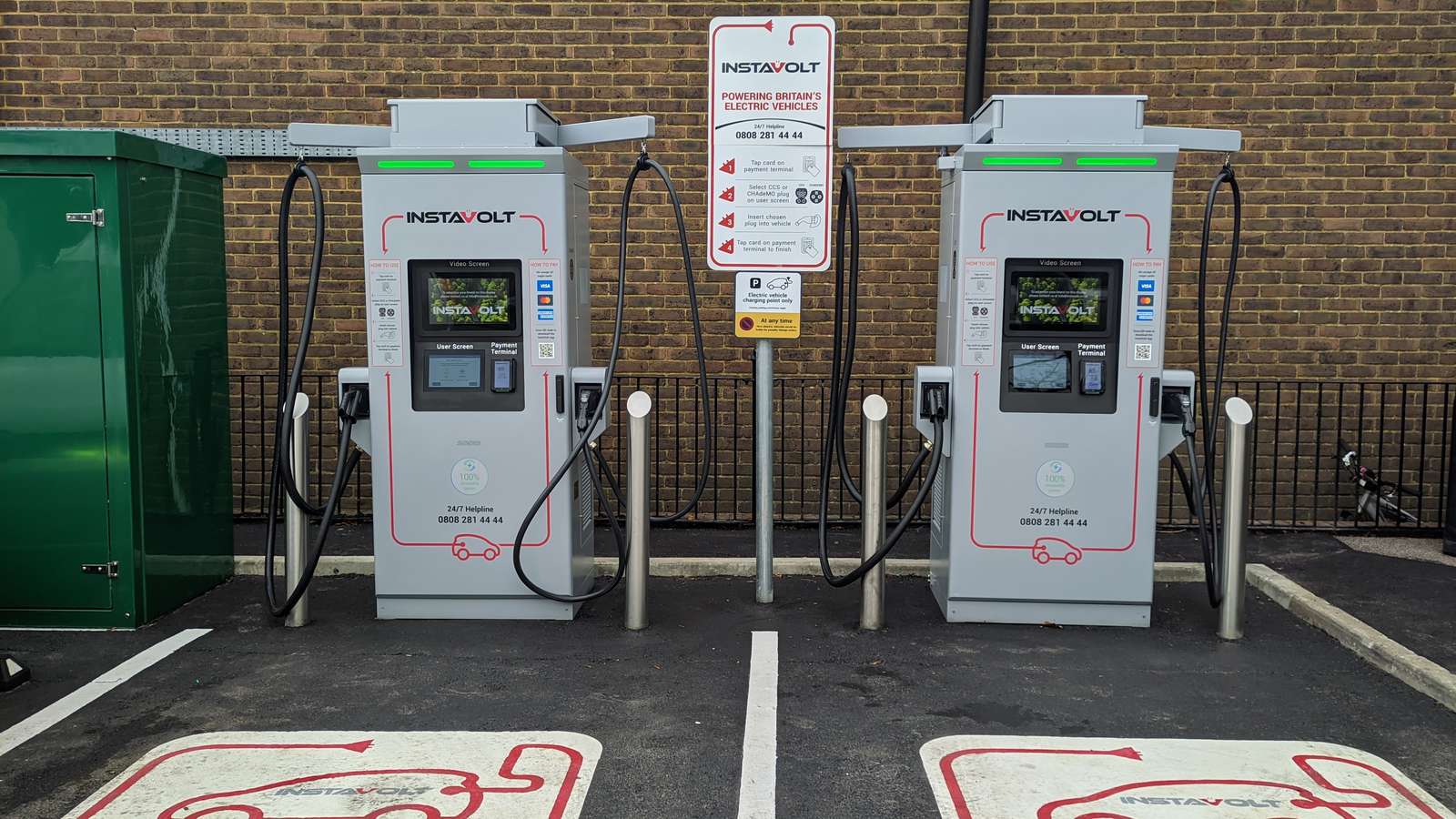
Quick answer: In September 2026, the average pay-as-you-go price to charge on the UK public network was 54p per kWh on standard and fast chargers up to 49kW, and 79p per kWh on rapid and ultra-rapid chargers of 50kW and above, according to Zapmap. For an average EV, that is about 16p and 24p a mile.
The latest averages
Zapmap’s Charging Price Index, updated on 7 October 2026, uses data covering around 75% of UK public chargers. It weights prices by how much each charger is used.
| Charger type | Average PAYG price, September 2026 | About per mile |
|---|---|---|
| Standard and fast (3kW to 49kW) | 54p/kWh | 16p |
| Rapid and ultra-rapid (50kW and over) | 79p/kWh | 24p |
| All chargers | 75p/kWh |
Zapmap’s per-mile figures assume an average-efficiency EV. Its average price across all chargers has risen to 75p per kWh since September 2025. Our September 2026 news report has more detail.
Cheaper networks
Zapmap says many networks charge less than the 79p rapid average, including:
- Sainsbury’s Smart Charge, 72p per kWh
- Believ, 66p per kWh
- Tesla Superchargers open to all drivers, an average of 69p per kWh
- Tesla drivers using the whole Supercharger network, an average of 48p per kWh
Zapmap notes that some operators run time-limited, location or partner deals, so many drivers pay less than the average PAYG price. Check the price on the charger or app before you plug in.
How public charging compares
Public charging is several times dearer than charging at home on an EV tariff:
| Where you charge | Price per kWh | About per mile |
|---|---|---|
| Home, off-peak EV tariff (Intelligent Octopus Go) | 7.6p | 2.3p |
| Home, price cap rate (October to December 2026) | 26.32p | 7.9p |
| Public, standard and fast | 54p | 16p |
| Public, rapid and ultra-rapid | 79p | 24p |
The home per-mile figures are our sums, using Octopus Energy’s UK average of 0.301kWh a mile. See the cost of charging at home.
Zapmap says a typical driver doing 20% of their charging in public can expect to save £1,130 a year in fuel costs, and that drivers who rely entirely on public charging will often be better off than drivers of a comparable petrol or diesel car. Our EV vs petrol calculator lets you test your own mileage.
VAT on public charging
Public electricity is charged at the standard 20% VAT rate, while household electricity in Great Britain is VAT-free from 1 October 2026 to 31 March 2027. See no VAT on electricity.
Your rights at public chargers
The Public Charge Point Regulations 2023 require operators to:
- offer contactless payment on new public chargers of 8kW and above, and on existing rapid chargers
- display the total price in pence per kWh
- keep their rapid charger network working, on average, 99% of the time each year
- run a free 24-hour staffed helpline, with the number shown on or near the charger
- let drivers pay through third-party roaming services
How to pay less
- Charge at home if you can. See do I need a home charger.
- Use slower chargers where you have time, such as at the supermarket or on-street. Zapmap’s average for chargers under 50kW is 25p per kWh lower than for rapid ones.
- Compare networks using a map app before a journey.
- Stop rapid charging at about 80%. Charging slows above that, so the last 20% takes longer. See how long it takes to charge.
- Look at on-street and workplace options. See charging without a driveway.
Frequently asked questions
Why do some chargers cost more than others?
Zapmap’s data shows rapid and ultra-rapid chargers cost much more on average than slower ones, and prices also vary by network and site.
Are subscriptions worth it?
Some networks offer lower prices for members. Whether it pays depends on how often you use that network. Compare the total cost, including any monthly fee.
Can I see the price before I charge?
Yes. Operators must display the total price in pence per kWh on the charger or a separate device, such as an app, that does not need a contract.
Related guides and tools
- Hubs: all our electric car guides and charging guides.
- Tools: the charging cost calculator, EV vs petrol cost comparison, eVED calculator and grant checker.
- Also read: Public charging prices up about 4% on a year ago, Zapmap figures show and How long does it take to charge an electric car? Times by charger.
Sources
- Charging price index, Zapmap, updated 7 October 2026
- The Public Charge Point Regulations 2023, legislation.gov.uk
- Intelligent Octopus Go, Octopus Energy
- Energy price cap unit rates and standing charges, Ofgem
Last checked: 19 October 2026
Image credit: OrangeStarling1997 via Wikimedia Commons, CC BY-SA 4.0, cropped.