Quick answer: Ask the seller for a battery state of health (SoH) report, check how much of the battery warranty is left, and test drive the car from a full charge. If the seller has no report, an independent test is available from specialist providers. Do not rely on the range shown on the dashboard alone.
Battery worries put a lot of people off buying a used electric car. Autotrader said in December 2025 that 34% of car buyers cite battery health as a key barrier to going electric. Its research also found that only 56% of used car retailers always check battery state of health when preparing an EV for sale, and that only 28% of those who check always put the result in their adverts.
So you often have to ask. This guide explains what to ask for and what to look out for.
Why battery health matters
Every battery slowly loses capacity with age and use, which means less range from a full charge. The Energy Saving Trust says battery decline over time is relatively small, and that there is “usually roughly a 10% reduction in battery range after 5 years”. That is a general guide, not a promise for any particular car. How a car has been charged, stored and driven all make a difference.
What “state of health” means
State of health, usually shortened to SoH, is a measure of how much of its original capacity a battery still has, shown as a percentage. A battery at 90% SoH can hold roughly 90% of the energy it could when new.
Two things to know:
- Cars estimate their own SoH. Some show it in a menu or an app; many do not show it at all. It is an estimate made by the car’s own software.
- Independent tests measure it differently. Some providers say their tests assess the battery pack directly rather than relying on the car’s estimate. Different methods can give different results, so note which method was used.
Free checks you can do on a test drive
- Ask to start from a full charge. The Energy Saving Trust suggests test driving with a full battery so you can see the state of the battery and the range for yourself.
- Look at the range estimate, with care. It depends on recent driving, temperature and settings, so treat it as a clue rather than a measurement. Cold weather alone can cut range.
- Check for a SoH reading in the car’s menus or the maker’s app, and ask the seller to show you.
- Try both charging sockets. Plug in to a public charger if you can, and check the charge port and any cables that come with the car. The Energy Saving Trust notes you will need a Type 2 cable for public chargers.
- Watch for warning lights about the battery or charging system.
Paid tests compared
Paid battery tests broadly come in three types. We have not tested any of these services ourselves. Prices below are what the providers advertised on their own websites on 19 October 2026.
| Type | How it works | Example |
|---|---|---|
| Dealer diagnostic test | A device plugs into the car’s diagnostic (OBD) port and produces a certificate | Generational sells tests to dealers from £29 per vehicle |
| Independent test by a visiting tester | An approved tester carries out the test at your location or theirs | Battery Health Check, using AVILOO’s system, advertises its certified test at £100 |
| Home kits | A device is sent to you to plug in, then returned | Several providers offer these; check the price and method on the day |
If you are buying from a dealer, ask whether they have already had a test done. A recent certificate saves you paying for one.
What a good result looks like
There is no official pass mark for used EV batteries, and we will not invent one. Instead:
- compare the SoH with the car’s age and mileage, and with similar cars you are looking at
- compare it with the battery warranty threshold, which is the level below which the maker promises to repair or replace the battery
- ask what method produced the figure, and when the test was done
Battery warranties explained
Most makers offer a separate battery warranty, typically for longer than the rest of the car. The Energy Saving Trust says most offer warranties, some of up to eight years, that guarantee repair or replacement if capacity drops below a certain level.
For a sense of the standard, new cars that qualify for the government’s Electric Car Grant must have a battery warranty of at least 8 years or 100,000 miles, whichever comes first, covering replacement if the battery falls below 70% capacity during the first 8 years, according to the Electric Car Grant guidance. That is a rule for new cars in the grant scheme, not a guarantee that applies to every used car. Always check the maker’s own terms for the exact car.
When you check a warranty, find out:
- the start date (usually first registration) and the end date or mileage limit
- the capacity threshold that triggers a repair or replacement
- whether it transfers to you as the next owner
- whether it depends on the car being serviced on time
What to ask the seller
- Do you have a battery state of health report? When was it done, and by what method?
- How much of the battery warranty is left, and does it transfer?
- Is the battery owned with the car? Some older electric cars were sold with the battery rented separately, and the Energy Saving Trust suggests checking this.
- What is the battery size in kWh, and what is the maximum charging speed?
- Which charging cables come with the car?
- Has the car had any battery or charging repairs, or recalls?
Other checks
- MOT history. For cars old enough to have one, use the free GOV.UK MOT history check to see past results and recorded mileage.
- Recalls. Use the GOV.UK recall check to see whether the car, or parts fitted to it, have been recalled.
- eVED from April 2028. Under the government’s plans, the DVLA vehicle enquiry service will show whether a car pays eVED and how much mileage has been paid, and any prepaid mileage credit transfers with the car. See our eVED explainer.
Red flags
- the seller will not let you test drive from a full charge, or refuses a battery test
- no SoH report and no service history
- range far below what similar cars show in similar weather
- battery or charging warnings on the dashboard
- the battery warranty has ended, or the seller cannot say whether it transfers
Frequently asked questions
Is the range on the dashboard a battery health check?
No. It is a prediction based on recent driving and conditions. It can be useful alongside a proper SoH reading, but it is not a measure of battery health.
Is there a government grant for used electric cars?
No. The Electric Car Grant is a discount on certain new cars only, applied by the seller.
Should I avoid a car with a lower SoH?
Not always. A lower figure may still suit a short daily commute, especially if the price reflects it. Think about the range you actually need, and how much warranty is left.
Sources
- Retailers could unlock even more EV sales with battery health info, Autotrader plc, 16 December 2025
- Buying a second hand electric car or van, Energy Saving Trust
- How to apply for vehicle eligibility for the Electric Car Grant, GOV.UK
- Check the MOT history of a vehicle, GOV.UK
- Check if a vehicle, part or accessory has been recalled, GOV.UK
- The introduction of eVED: consultation response, HM Treasury
- Generational EV battery certification, Generational (provider page, price as advertised)
- Battery Health Check, Battery Health Check (provider page, price as advertised)
Last checked: 19 October 2026
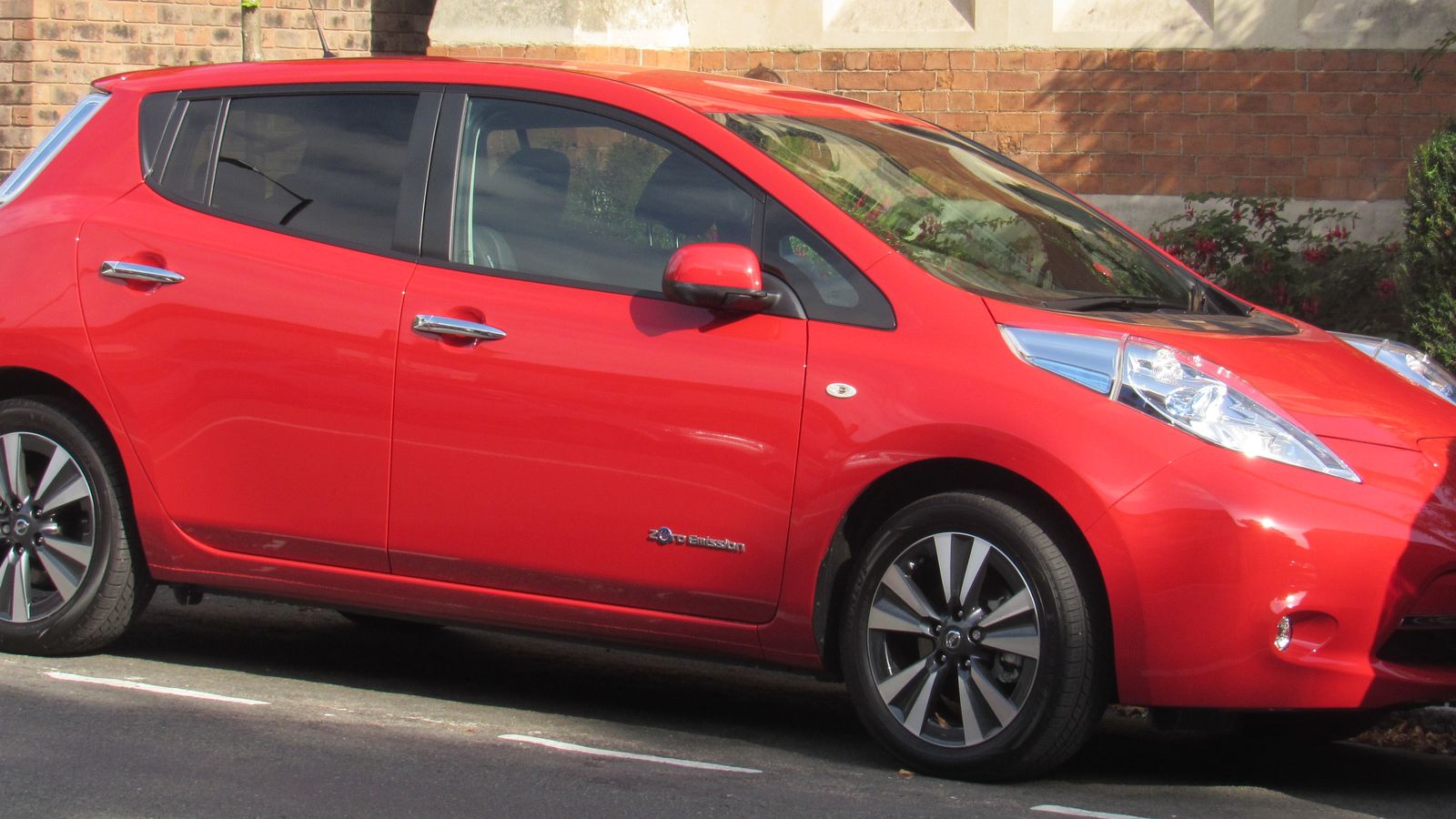
Image credit: Makizox via Wikimedia Commons, CC BY-SA 4.0, cropped.