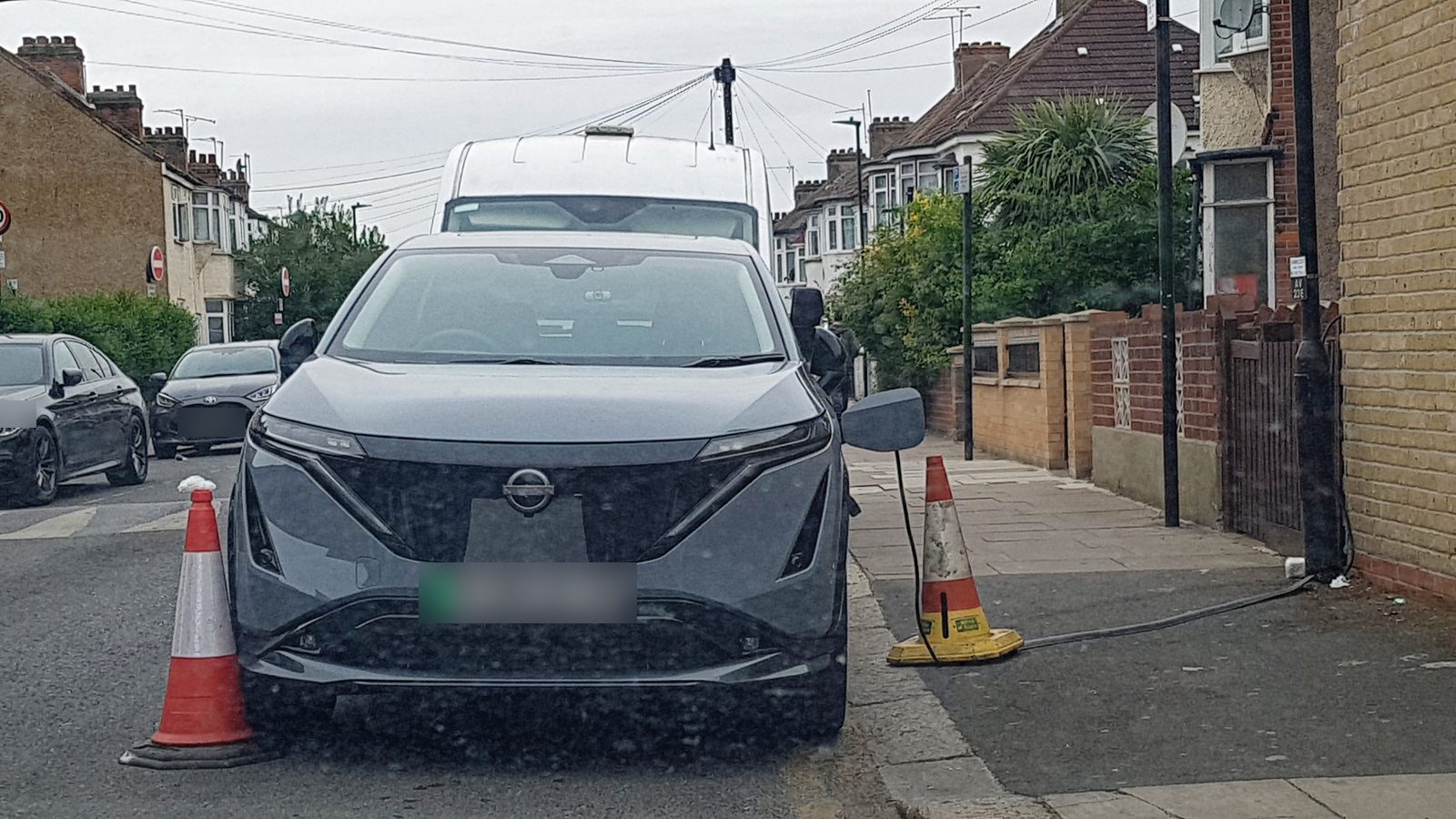
In short: Since 21 October 2026, households in England with only on-street parking no longer need planning permission for a cross-pavement cable channel or the home charger that goes with it, as long as the channel is installed or authorised by the council as highway authority. You still need the council’s highways permissions, and the change does not apply in conservation areas, at listed buildings, or in Wales, Scotland or Northern Ireland.
What has changed
The Department for Transport announced the change on 21 October 2026, the day a new planning order came into force. A cross-pavement solution is a cable channel set into the pavement, so your charging cable can safely reach your car on the street.
Until now, the explanatory memorandum says, householders needed planning permission for the channel and for a charger away from a driveway. The order adds new permitted development rights, so:
- The cable channel no longer needs a planning application, if it is installed by, on behalf of, or with the authorisation of the highway authority.
- Your home charger can now go anywhere within the boundary of a house or block of flats, such as a small front garden or the front wall, not just on a driveway. Where the cable crosses a footway, it must use an authorised channel.
The limits
Under the order:
- Neither the channel nor the new charger route covers conservation areas, the grounds of listed buildings or scheduled monuments.
- Only one charger per house or block of flats can use the new route.
- A wall charger must be no more than 1.6 metres off the ground. If your front wall sits right on the pavement, it can stick out no more than 0.2 metres and must leave at least 1.5 metres of footway clear.
- The channel must be removed and the pavement reinstated once it is no longer needed.
Outside these rules, you may still need planning permission.
What the government says
The government says the change will save drivers “up to £300 on installation” and open up home charging “for as little as 2p per mile”. It also says cross-pavement charging can help residents without off-street parking access “savings of up to £1,750 on running costs”. These are the government’s own estimates; the announcement doesn’t show how they were calculated.
Buses and Local Transport Minister Simon Lightwood said: “We’re saving drivers up to £300 off the cost of installing home charging by cutting unnecessary red tape.”
What isn’t changing
- Highways permissions still apply. You still need consent from your council as highway authority under section 178 of the Highways Act 1980 to lay a cable across the pavement, and a street works licence under section 50 of the New Roads and Street Works Act 1991, the government’s consultation response confirms. Your council can still say no.
- It is England only. The order applies in England. Rules in Wales, Scotland and Northern Ireland have not changed.
- No trailing cables. A loose cable or extension lead across the pavement is still not allowed without permission. Our guide to charging without a driveway covers the safe options.
- Driveways are unaffected. Chargers on driveways were already covered by permitted development.
What to do now
- Ask your council whether it allows cross-pavement channels and how to apply. Some have approved suppliers; some don’t allow them yet.
- Check the grant. A government grant towards the charger is open to households with on-street parking until 31 March 2027. See our cross-pavement grant guide.
- Get written quotes for the charger and channel. Our home charger installation costs guide explains what affects the bill.
The explanatory memorandum says updated official guidance will follow “shortly”. The existing cross-pavement guidance, from December 2024, still describes the old planning rules.
Two consultations open until 16 December
Two consultations for England close at 11:59pm on 16 December 2026. One proposes an “ability to charge” to make it easier for tenants and leaseholders to get permission for a charge point. The other proposes building regulations changes so new and renovated covered car parks get charge points. Renters and flat owners can read about today’s chargepoint grant for renters and flats.
Do I still need my council’s permission for a cross-pavement charger?
Yes. You still need the council’s consent as highway authority, and a street works licence, before anything goes in the pavement.
Does this apply in Wales or Scotland?
No. The new permitted development rights apply in England only.
Sources
- Drivers to save up to £300 when installing EV chargers at home, as government slashes unnecessary red tape, Department for Transport, 21 October 2026
- The Town and Country Planning (General Permitted Development) (England) (Amendment) (No. 2) Order 2026, legislation.gov.uk, in force 21 October 2026
- Explanatory memorandum to the Order, legislation.gov.uk
- Changes to various permitted development rights for EV charging: government response, 11 September 2026
- Cross-pavement solutions for charging electric vehicles, Office for Zero Emission Vehicles, December 2024
- Expanding electric vehicle charging access for tenants and leaseholders, Department for Transport, 21 October 2026
- Amending the building regulations: electric vehicle charging infrastructure, 21 October 2026
Last checked: 22 October 2026
Image credit: Acabashi via Wikimedia Commons, CC BY-SA 4.0, cropped, number plates blurred.