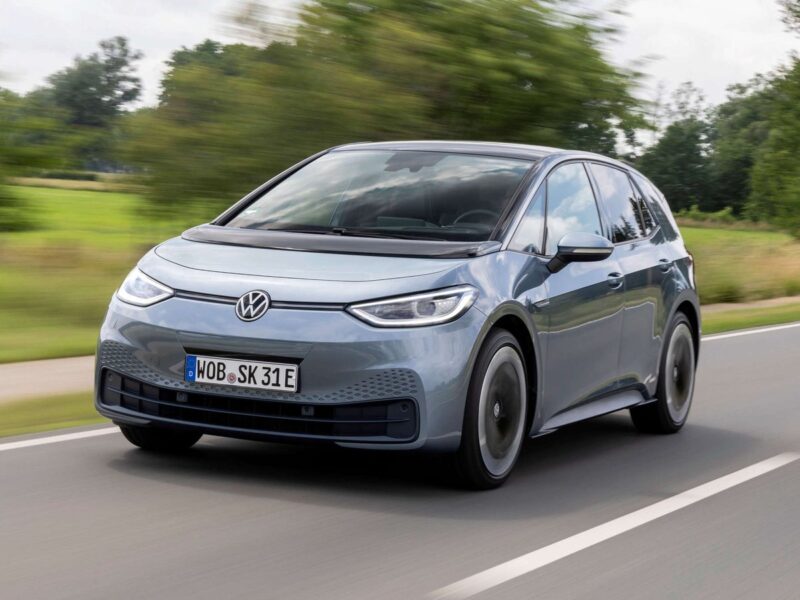
Quick answer: The Electric Car Grant (ECG) takes up to £3,750 (Band 1) or £1,500 (Band 2) off the price of eligible new electric cars with a recommended retail price of £37,000 or less. The seller applies the discount, so buyers do not apply. It runs until 31 March 2030, and only cars approved for the scheme qualify.
What the grant is
The ECG is a government discount on some new zero-emission cars. According to GOV.UK, you do not apply for it yourself. The seller includes it as a discount in the purchase price. Dealers and manufacturers deal with the paperwork through an online portal.
The scheme’s Find a grant page gives an opening date of 15 July 2025 and a closing date of 31 March 2030.
The two bands
| Band | Maximum discount |
|---|---|
| Band 1 | £3,750 |
| Band 2 | £1,500 |
The government’s applicant guidance says the highest grant is for cars with the lowest carbon emission scores. Those scores are based on the sustainability of how the car and its battery are made, not on the car’s tailpipe, since every eligible car produces zero tailpipe emissions.
The guidance says vehicles must be made by a company with a verified Science Based Target, or one assessed at Level 4 or higher in the Transition Pathway Initiative’s auto sector assessment. The carbon emissions from the places where the car is assembled and its battery cells are produced must also be below certain thresholds.
Which cars qualify
To be eligible, GOV.UK says a car must:
- be an M1 passenger vehicle
- produce 0g CO2 per km at the tailpipe
- have a minimum battery range of 100 miles (160km)
- have a vehicle warranty of 3 years or 60,000 miles, whichever comes first
- have a battery warranty of 8 years or 100,000 miles, whichever comes first
- meet minimum sustainability criteria
- be approved for the scheme
The applicant guidance adds that the battery warranty must provide for a replacement if the battery falls below 70% capacity during the first 8 years.
GOV.UK publishes the current list of eligible cars, split into Band 1 and Band 2. Models are added over time, and new versions of an approved car are not automatically eligible, so check the list and ask the dealer to confirm the exact version you are buying. We have not reproduced the list here because it changes.
The £37,000 price limit
A car must have a recommended retail price (RRP) at or below £37,000. The applicant guidance says RRP includes:
- VAT
- mandatory extras such as delivery charges or administration fees
- the battery cost, even if the battery is rented separately
- any non-standard option fitted by the maker or dealer that affects battery capacity, drivetrain or maximum power
It excludes things like other optional extras, insurance and service packages, the first registration fee and discounts.
The £42,000 exception
There is a little-known rule for versions of the same model. If a car belongs to the same “interpolation family” as a version with an RRP below £37,000, the guidance says versions in that family up to a maximum of £42,000 are treated as meeting the price requirement. The guidance explains that versions in the same family can have different official range and energy consumption figures.
In practice, this means some higher-spec versions of an eligible model may qualify even if their price is above £37,000. The government’s eligible list and the dealer are the ways to check.
How to get the discount
- Check the list. Find the model on GOV.UK’s eligible cars list.
- Confirm the version. Ask the dealer to confirm in writing that the version and options you want are eligible, and which band applies.
- See it on the invoice. The discount should be shown in the purchase price.
The grant is available for eligible cars registered in England, Scotland, Wales and Northern Ireland. The guidance says Crown dependencies, including the Isle of Man, Jersey and Guernsey, are not included.
Used cars do not qualify
The ECG is for new cars. GOV.UK describes it as a grant for new zero-emission cars, and the seller applies it at the point of sale. There is no equivalent government grant for buying a used electric car. If you are buying used, see our used EV battery health guide.
How much funding there is
The government’s eVED consultation response says total ECG funding has been increased to £2 billion. It also says that, as of July 2026, the grant had supported over 140,000 new electric car sales.
The guidance says the government reserves the right to alter the eligibility criteria during the scheme.
How it fits with other costs
The grant lowers the price you pay. It does not change running costs or tax. Two things to factor in:
- Electric Vehicle Excise Duty (eVED). From 1 April 2028, the government plans a pay-per-mile charge for electric cars, alongside existing vehicle tax. Our eVED explainer sets out the rates.
- The Expensive Car Supplement. GOV.UK’s vehicle tax rates say you pay an extra £440 a year for an electric car with a list price of more than £50,000, for 5 years from the second time the vehicle is taxed. This also applies to electric vehicles registered between 1 April 2025 and 31 March 2026. Zero emission vehicles registered before 1 April 2025 do not pay it. Cars eligible for the grant are priced well below that threshold. See do electric cars pay road tax? for the full rates.
To check a specific car, use our grant checker. To weigh the overall costs, read are electric cars worth it? and new or used electric car?.
If you will charge at home, a home charger is a separate cost. Our home charger installation cost guide covers advertised prices and grants for renters, flat owners and households with on-street parking.
Frequently asked questions
Do I need to apply for the Electric Car Grant?
No. The seller applies it as a discount in the purchase price.
Can I get the grant on a car over £37,000?
Only if it is part of the same interpolation family as an eligible version priced under £37,000, and its RRP is no more than £42,000. Check the eligible list and ask the dealer.
Is there a grant for vans or wheelchair accessible vehicles?
GOV.UK lists separate grants for wheelchair accessible vehicles, vans and trucks. They have their own rules.
Does the grant apply in the Isle of Man or Channel Islands?
No. The applicant guidance says Crown dependencies are not included.
Sources
- Zero emission vehicles eligible for a grant: cars, GOV.UK
- Electric Car Grant, Find a grant
- How to apply for vehicle eligibility for the Electric Car Grant, GOV.UK
- Vehicle tax rates, GOV.UK
- The introduction of Electric Vehicle Excise Duty (eVED): consultation response, HM Treasury
Last checked: 19 October 2026
Image credit: Philip Jeffrey via Wikimedia Commons, CC BY-SA 2.0, cropped.